
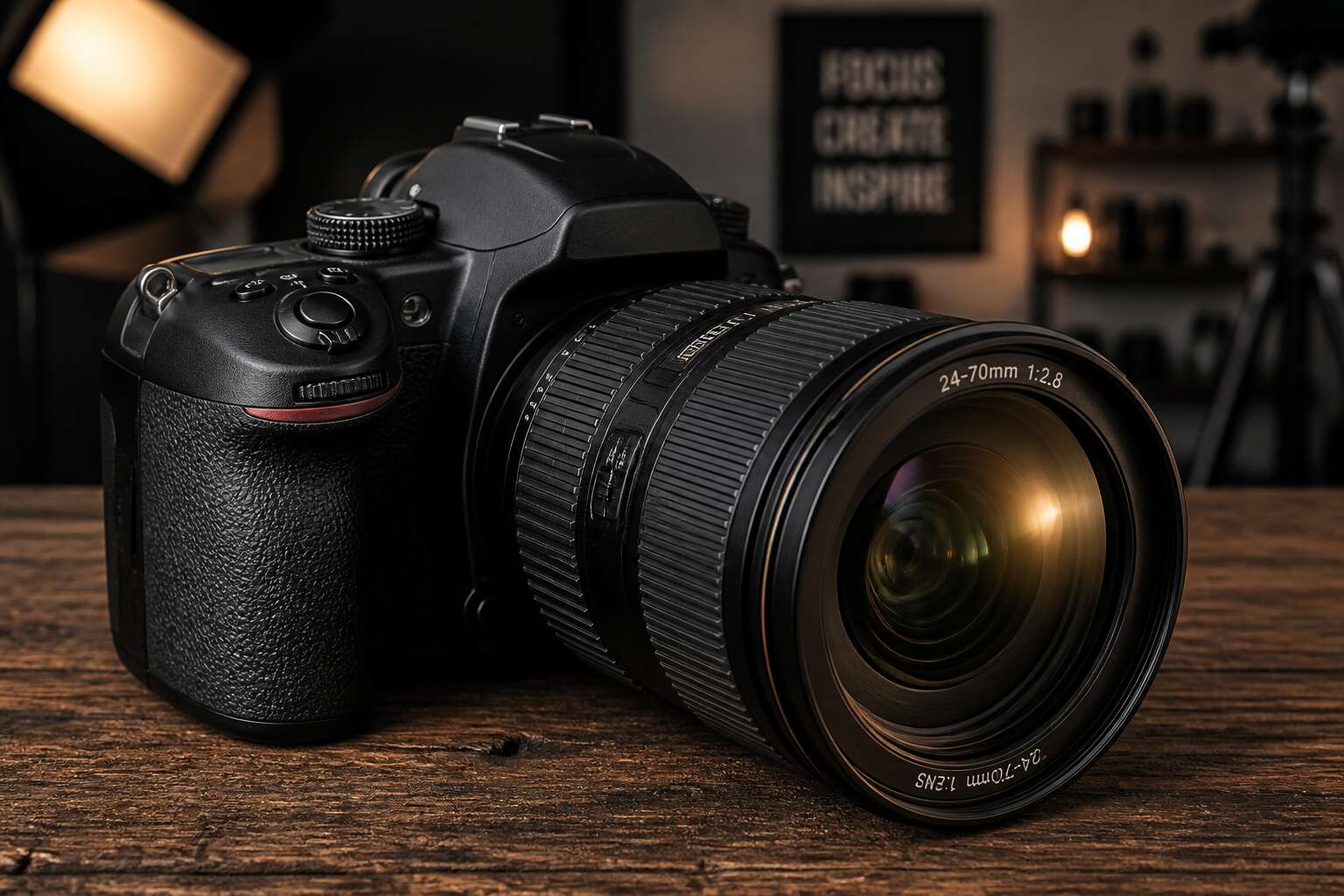
The Anatomy of a DSLR
There is a quiet confidence to lifting a DSLR to your eye. It is a deliberate act in a world of hurried thumb swipes. This physicality is the essence of dslr camera explained for the uninitiated. The mirror inside flips up with a satisfying clack, a mechanical heartbeat that confirms you are not merely taking a picture, you are creating one.
The magic lies in that mirror and the pentaprism above it. Light enters the lens, bounces off the mirror, and travels through the prism to the viewfinder. What you see is an exact, optical preview, unmediated by a digital screen. It is a direct connection to the scene, a truthful representation of light before the camera interprets it. This is why many photographers prefer it; the world looks real, not processed.
To understand the system fully, consider the core components working in concert. Each part has a specific, non-negotiable job.
- The lens focuses light and controls depth of field.
- The mirror reflects light upward into the viewfinder.
- The shutter opens to expose the sensor to that light.
Then, there is the sensor itself, the digital canvas. When you press the shutter button, the mirror swings away, the curtain opens, and the sensor gathers photons for a precise moment. That brief exposure, measured in fractions of a second, captures the image data. The processing engine then writes this information to the memory card, translating the light into a file. It is a rapid, almost violent sequence that results in a frozen moment.
Operating a DSLR is an exercise in deliberate control. You invest in glass and a body that will last, learning its quirks and buttons. It demands a certain tactile respect, a willingness to understand the mechanics of photography. This is the appeal of a photographic tool that requires you to engage with the process, not just the result.
How a DSLR Captures an Image
Light has a single path through a DSLR, and that path decides every photograph you take. A DSLR camera explained from the inside reveals a mirror that directs light up to the viewfinder. Press the shutter, and that mirror flips away. The light then travels to the image sensor, where millions of pixels measure its intensity and colour. The camera assembles those measurements into a picture in milliseconds.
The process follows a precise order:
- The mirror lifts to expose the sensor.
- The shutter opens for a set duration.
- The sensor captures the light pattern.
- The shutter closes and the mirror returns.
I find it remarkable that such a rapid sequence produces consistent results. The timing matters more than any setting on the dial. Understanding this flow makes you appreciate every click of the shutter.
Key Differences Between DSLR and Mirrorless
There is a moment every photographer faces, staring at a mirrorless camera that weighs less than your morning coffee. You wonder if your trusty DSLR has become a dinosaur. For anyone seeking dslr camera explained, the real split comes down to a flicking mirror and an electronic viewfinder. The mirrorless body uses no optical viewfinder. It captures a live preview straight from the sensor. The DSLR reflects light through a mirror, allowing you to see exactly what the lens sees. Both deliver superb images. The mirrorless unit is quieter and faster in bursts, while the DSLR offers that old school battery endurance. A simple breakdown looks like this:
- DSLR: optical view, longer battery life, bigger body
- Mirrorless: compact design, silent shooting, live exposure preview
I swapped to mirrorless for hiking, but I still miss the satisfying clunk of a mirrored shutter. Your choice depends on your shoulders and your patience.
Choosing the Right DSLR
Ask any photographer for a dslr camera explained and you will hear about mirrors and sensors, but choosing one is more about self awareness than optics. In Pretoria’s afternoon heat, a heavy camera becomes a burden before you have taken a single good shot. Your lifestyle dictates the body more than the spec sheet does.
Consider a few practical angles before you commit:
- How many controls do you truly want to fiddle with?
- Are your subjects cooperative adults or unpredictable children?
- Does your daily carry bag have room for a 600 gram body?
A dslr camera explained through this lens becomes a personal choice, not a status symbol. The right one quietly invites you to shoot more, while the wrong one sits in a drawer until someone asks to borrow it.
Tips for Shooting with a DSLR
Having a dslr camera explained to me by a patient friend changed how I see photography. I used to shoot in auto mode, and my images felt lifeless.
I now start with shutter speed. On a 50mm lens, I keep it above 1/50th of a second to avoid blur. Then I adjust ISO, aiming for the lowest possible value. Single point autofocus gives me precision that multipoint modes never could.
Bracketing exposures in tricky light is a habit worth building. Reviewing the histogram after every few shots reveals problems instantly. These small practices turned my mediocre results around!
0 Comments