
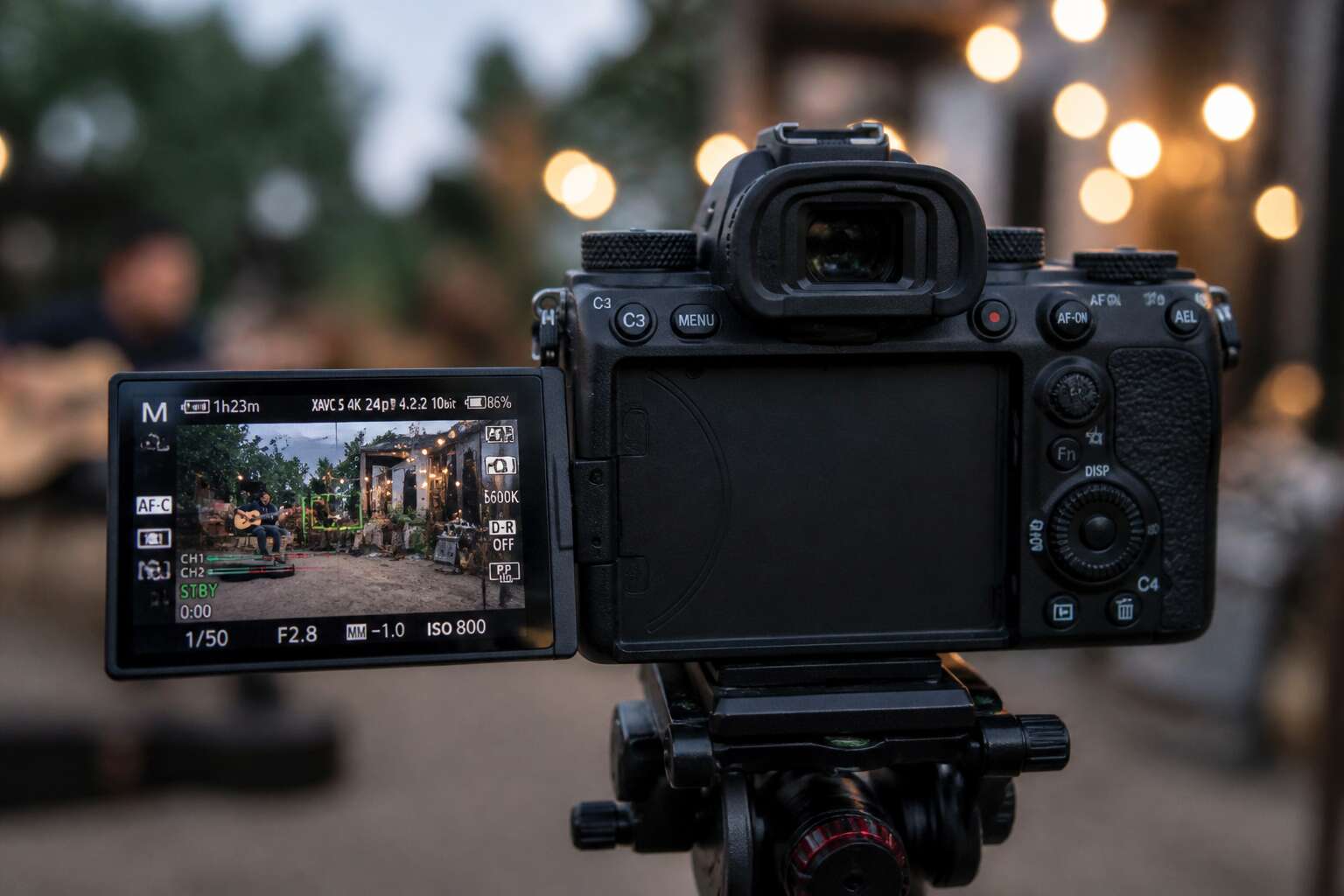
Understanding DSLR Video Capabilities
The Evolution of DSLR Video Recording
Few photographers anticipated the transformation when the first DSLR with video capture arrived. The Canon EOS 5D Mark II demonstrated in 2008 that a still camera could produce cinematic footage. Today, the question can dslr camera record video seems almost unnecessary, yet capabilities vary across models.
Modern DSLRs offer 4K resolution, manual exposure controls, and interchangeable lenses. The optical viewfinder still functions for photography, while live view activates the sensor for video. Some bodies limit recording to 30 minutes; others allow unlimited capture. The evolution moved from basic 720p clips to full-frame sensors with logarithmic profiles. The answer to can dslr camera record video now depends on sensor readout speed and processing power.
Key milestones include:
- The 5D Mark II’s 1080p breakthrough
- Nikon’s D90 introducing HD video
- The rise of mirrorless competition pushing DSLR innovation
Broadcasters and indie filmmakers had to reconsider their gear entirely.
Key Technical Specs for Video: Sensor Size, Resolution, and Frame Rates
Any photographer in Johannesburg or Cape Town who asks can dslr camera record video will find the answer in the hardware. A full-frame sensor captures roughly 2.3 times more light than an APS-C sensor, which translates into cleaner shadows and a richer dynamic range. Crop sensors still produce sharp footage, but they struggle in dimly lit interiors.
Resolution matters far less than readout speed. A 4K image means little if the sensor bins pixels slowly and creates rolling shutter artefacts. Most DSLRs record 1080p natively. Frame rates dictate mood and playback speed. A typical South African shoot uses 25 frames per second to match PAL standard outputs. Consider the common options:
– 24p for a cinematic look.
– 25p for local broadcast.
– 60p for smooth slow motion.
The processor inside the camera is the gatekeeper. I have seen a modest sensor outperform a full-frame body because the internal logic worked faster. So the question can dslr camera record video becomes a matter of compromise between sensor, resolution, and processor speed.
How DSLR Video Differs from Traditional Camcorders
The production assistant handed me a camcorder and a DSLR on the same shoot. I chose the DSLR within five minutes. The question can dslr camera record video was never the issue. The issue was how these devices behave differently under pressure.
Camcorders prioritise continuous operation. They offer servo zooms, internal ND filters, and balanced audio inputs. DSLRs prioritise control. You physically change lenses, meter manually, and adjust focus with your own fingers. That changes your relationship with the shot!
Here is what separates them in practice:
– Interchangeable lenses allow optical character shifts
– Large sensors create distinct depth of field
– Manual controls slow down your workflow deliberately
South African crews shooting events in Johannesburg or Cape Town often carry both systems. The camcorder covers the long take. The DSLR captures the expressive frame. They are different tools, plain and simple.
Essential Features for Recording Video with a DSLR
Sensor Size and Low-Light Performance
The size of your sensor is the basis of your video’s visual personality. A full-frame sensor provides a wider field of view and a shallower depth of field, which helps separate your subject from a busy background. A crop sensor brings you closer to the action, but it demands more careful composition in tight spaces.
- Full-frame sensors excel in low light.
- APS-C sensors apply a 1.5x focal length factor.
- Dynamic range depends heavily on sensor size.
Low-light performance is a major reason videographers stick with DSLRs. If you are wondering, “can dslr camera record video” reliably after sunset, the answer lies in the ISO range. High-end bodies maintain clean footage at high ISOs, while smaller sensors introduce unwelcome grain.
This physical limitation dictates your creative ceiling. You cannot out-edit a poor signal-to-noise ratio. For event videography in South Africa, whether under tent lighting or on dark reserves, investing in a sensor with excellent low-light capabilities is your best safeguard.
Autofocus Systems for Video: Phase Detect vs. Contrast Detect
When you ask can dslr camera record video with dependable autofocus, the answer depends on the system. I have filmed under harsh Karoo sunlight, and contrast detect AF struggles to keep up with moving subjects. It searches back and forth, a frustrating wobble. Phase detect AF locks onto faces and animals without hunting.
Here is what separates the two:
- Phase detect uses dedicated pixels to measure distance instantly.
- Contrast detect analyses contrast peaks, slower and less reliable in video.
For a DSLR, phase detect on the sensor, often called dual pixel, makes handheld video feel fluid. Without it, you will constantly refocus manually.
Frame Rates and Resolution Options
Walk into any Cape Town camera shop and the question can dslr camera record video still gets asked. Of course it can! I have watched this capability reshape local production budgets. The real question is whether you know which frame rate suits your story. A 24fps setting delivers that cinematic cadence many filmmakers crave, while 50fps or 60fps lets you slow action down for wildlife sequences in the Kruger.
Resolution choices matter equally. Shooting 4K gives you room to crop in post without losing detail. 1080p remains practical when memory cards run tight.
Your decision shapes the final feel:
- 24fps for narrative work
- 50/60fps for slow motion
- 4K for flexibility in editing
- 1080p for reliable storage
Frame rates and resolution determine what each shoot can achieve, making the question can dslr camera record video less about capability and more about control.
External Microphone and Audio Input Ports
Great footage is only half the story, as any Cape Town editor will tell you. A camera’s built-in microphone does a disservice to the visual fidelity a DSLR sensor captures. The wind off Table Mountain or the hum of a coffee shop will dominate your audio track, sabotaging otherwise pristine visuals. This is where the external microphone becomes your most vital tool.
To utilise one, you need an audio input port. Many DSLRs include a 3.5mm jack, offering a direct line for a shotgun or lavalier mic. This hardware connection bypasses the internal preamp limitations, providing a cleaner signal. Because sound is more than half the experience, ignoring this port means the answer to can dslr camera record video is technically yes, but practically incomplete.
– 3.5mm TRS port for standard mics
– 3.5mm TRRS port for smart device compatibility
– Check for manual audio level control in the menu
An XLR adapter, while bulkier, offers professional-grade control. The choice depends on your location and story. A documentary on the Garden Route demands different gear than a corporate interview in Sandton. Without these inputs, you are merely capturing an image, not a story.
In-Body Image Stabilization Explained
Ask any videographer in Durban about the bane of handheld shooting, and they will mention micro vibrations. In-body image stabilization, or IBIS, corrects these subtle movements by shifting the sensor. Unlike lens-based stabilization, this method benefits every lens you attach, including older manual primes.
For the question of can dslr camera record video, IBIS expands your handheld options. You can walk through a market in Joburg or follow a child in Cape Town without a gimbal.
- Works with vintage manual lenses
- Effective for both photos and video
- Reduces the need for external rigs
Comparing DSLR Video to Mirrorless and Camcorders
DSLR vs. Mirrorless: Video Quality Showdown
Ask any wedding videographer in Pretoria and they will tell you the same thing: the subject matters more than the gear. Yet the question remains, can dslr camera record video with the same quality as a mirrorless body or a dedicated camcorder? The honest answer is yes, but with clear differences.
DSLRs offer strong color depth and dynamic range, especially when you use flat profiles. Mirrorless cameras match that output while delivering faster internal readouts, which cuts down rolling shutter. Camcorders provide consistent codecs and unlimited recording sessions. For a working shooter, the choice depends on what you value:
- Dynamic range for highlight and shadow recovery
- Codec options that simplify post production
- Rolling shutter behaviour during fast pans
None of these features alone decides the winner. Your workflow and final platform determine the value. That is why the debate persists in every camera shop from Sandton to Durban.
DSLR vs. Camcorder: Ergonomics and Workflow
When you rig a DSLR for video, you are constructing a tool from parts. A camcorder arrives complete. That difference shapes the whole shooting day.
For run and gun production, the camcorder body wins. Its balanced grip, servo zoom, and built-in ND filters let you react instantly. A DSLR needs a cage, external monitor, and follow focus to match that immediacy. Those additions take time and money.
The DSLR workflow does offer modular freedom. You configure the rig for each job. In my experience, that flexibility suits operators who own their process.
Consider what matters for your production:
– Handling comfort across long shoots
– Setup time before the first take
– Battery management for full days
– Client expectations for instant playback
So can dslr camera record video professionally? Yes. But you must accept the ergonomic compromise.
Codec and Bitrate Differences You Should Know
Compression is where the ideal of shooting video with a DSLR meets reality. The sensor might be excellent, but the codec and bitrate decide how much of that image survives. Most DSLRs record long GOP H.264 files at 8-bit 4:2:0. That works for online delivery. Push exposure in post and banding appears in skies and skin tones.
Mirrorless cameras have closed the gap by writing 10-bit 4:2:2 internally. Camcorders remain the benchmark with broadcast codecs like XAVC at higher bitrates. My own preference:
- 8-bit for quick turnaround edits
- 10-bit for serious colour grading
- Bitrate over resolution every time
For South African shoots, harsh light and fast action test any codec. So can dslr camera record video that grades well? Yes, but the bitrate limits your final latitude.
Lens Ecosystem and Adaptability
The lens mount is where DSLRs still excel. A decade of EF and F mount glass sits in second hand shops across Johannesburg and Durban. That means affordable optics for anyone asking can dslr camera record video without buying native lenses. Mirrorless cameras need adapters for this glass, which adds cost and can slow autofocus. Camcorders often come with fixed lenses or demand broadcast glass costing more than a used car.
For field work, adaptability matters. I typically pack:
– A 24-70mm f/2.8 for interviews
– A 50mm f/1.8 for dim interiors
– A 70-200mm for wildlife and sport
That kit covers most South African shooting conditions, from Cape Town to the Kruger. The DSLR’s mechanical aperture ring and familiar controls make it a dependable choice. When someone asks can dslr camera record video at a professional standard, the answer depends on the glass you put in front of it.
How to Maximize DSLR Video Quality
Choosing the Right Lens for Video: Prime vs. Zoom
The question can dslr camera record video usually gets answered before you consider the glass. But the lens decides the actual look. Prime lenses with wide apertures like f/1.8 let you shoot in soft evening light without pushing ISO too high. Zoom lenses offer flexibility, but many variable aperture zooms darken as you zoom in.
For video, a fast prime gives you that shallow depth of field that separates your subject from a cluttered Johannesburg street. A constant aperture zoom like f/2.8 keeps exposure stable while you reframe. That stability matters more than a few extra millimetres of reach. South African light can change quickly, so a lens that maintains its aperture helps you avoid sudden exposure shifts mid-take.
Setting Up Proper Exposure and White Balance
Yes, can dslr camera record video with solid quality, but only if you take control of exposure and white balance. Auto settings will fail you when the light shifts. The histogram shows exactly where your highlights are clipping, which matters in harsh midday sun.
Set your white balance manually instead of trusting auto. The Johannesburg afternoon casts a warm glow that auto white balance will try to correct, and it will often guess wrong. Use a white card or grey card for a custom reading. This takes thirty seconds and reduces colour correction time later.
- Expose for your subject, not the background
- Use zebra stripes if your camera has them
- Lock your ISO and shutter speed before rolling
Your camera can record video, but it cannot think for you. Manual control delivers consistent results take after take.
Using Manual Focus and Focus Peaking
Manual focus gives you control that autofocus cannot match. The question can dslr camera record video without hunting autofocus is yes, but only when you take control of the glass. Focus peaking highlights the edges of your subject in colour, turning a guess into a measurement.
When shooting in Johannesburg’s highveld light, the sun can wash out contrast on your screen. Peaking cuts through that haze, yet it deserves healthy suspicion. The glowing lines can fool you when shooting through heat shimmer or thin branches.
Here is what I check before every take:
- Magnify the LCD to confirm the eyes are sharp
- Trust peaking only as a starting point
- Recheck after any zoom or movement
Avoiding the Rolling Shutter Effect
The rolling shutter effect is the silent constraint on every DSLR sensor, a consequence of reading pixels line by line rather than capturing a single instantaneous frame. It rears its head when your Johannesburg street scenes include a passing taxi or a running child, creating that unmistakable wobble or skew. The question can dslr camera record video with crisp, undistorted motion is answered by learning to move within the camera’s physical limits. This is not a creative choice; it is a mechanical reality you must respect.
When panning, the sensor reads the top of the frame before the bottom, which means vertical lines lean like a drunkard’s stagger. To combat this, I adopt a strict shooting discipline that keeps the camera honest:
1. Pan slower than feels natural, giving the rolling shutter time to catch up with the scene.
2. Keep the shutter angle at 180 degrees, or 1/50th of a second at 25fps, to preserve motion blur rather than sharp, strobing skew.
3. Mount the camera on a gimbal or tripod for any lateral movement, as handheld shakes amplify the readout lag.
The best workaround is to simply stop moving the camera altogether. Static shots with subjects moving through the frame show far less distortion than a locked-off shot with a wide pan. The sensor’s readout speed is fixed, so your choreography must adapt. Yes, you can dslr camera record video beautifully, but you are the one who must compensate for the mechanical lag that sits between the lens and the memory card.
Improving Audio Capture on a DSLR
Even the most pristine sensor output sounds dreadful when the audio resembles a tin can filled with angry bees. Here is the uncomfortable truth: the question of can dslr camera record video beautifully is rarely a visual problem. It is an auditory one. The internal microphone on most bodies performs about as well as a wired pinocchio in a thunderstorm. Treating it as your primary capture device is self-sabotage.
Consider the cinematic potential of a quiet recorded conversation. The lowly 3.5mm jack, when paired with a decent shotgun mic, transforms your setup. But the camera preamp may still introduce hiss. Mastering the audio gain stages is tedious yet essential work.
The path forward involves two things for any filmmaker facing Gauteng traffic noise or Cape Town wind.
– Use an external recorder with manual level metering instead of relying on the camera preamp entirely.
– Always record at least 14dB of headroom to prevent clipping on sudden loud sounds.
– Monitor with quality closed-back headphones. You cannot fix a distorted take later.
Placing a lavalier closer to the mouth than the camera will ever be yields superior clarity. Autofocus hunts, but a bad take is worse. The answers to can dslr camera record video rely equally on keeping your eyes on the frame and your ears on the levels. Ignore the audio at your peril, because the visual magic means nothing without discernible dialogue. That quiet hum from a forgotten power line will ruin a perfect scene faster than a missed focus ever will.
Common DSLR Video Limitations and Practical Solutions
Recording Time Limits and Overheating Issues
Can a DSLR camera record video without constant interruptions? That depends. Most DSLRs still carry the infamous 29-minute recording limit, a vestige of EU import tariffs that classified longer recordings as camcorders. While newer firmware has relaxed this on some models, you will still encounter a hard stop when shooting a lengthy interview.
Then there is the overheating issue. DSLRs pack large sensors into bodies not designed for prolonged video use. After twenty minutes of 4K recording, some models display a thermometer icon and shut down mid-take. The honest answer to whether any DSLR camera can record video without intervention is often no. Practical workarounds include:
– Using an external recorder to bypass the 29-minute cap.
– Switching to 4K crop mode, which reduces sensor load.
– Rotating between two cameras so one cools while the other records.
Autofocus Limitations and Manual Pulling Focus
Autofocus limitations remain one of the clearest answers to the question can dslr camera record video with professional reliability. Contrast detect systems hunt for focus in low light, and even phase detect arrays drift when a subject moves across the frame. The result is a pulsing image that ruins an otherwise solid take.
Manual pulling focus sidesteps the hunting entirely. A videographer premarks the focus ring positions for each subject distance, then rotates smoothly between those marks during the shot. This technique demands rehearsal, but it produces predictable results that autofocus cannot match.
- Rehearsing the pull before recording builds muscle memory
- A follow focus rig enables smoother ring rotation
- A moderate aperture widens the acceptable focus range
For any shooter asking can dslr camera record video that holds up through an edit, manual pulling is the dependable path.
Crop Sensor vs. Full-Frame Considerations
The question can dslr camera record video with the nuance a filmmaker craves often hides in the sensor’s size. A crop sensor, with its 1.5x magnification, turns a humble 50mm lens into an 85mm portrait lens. This compression suits intimate closeups but traps wide shots in a cage of narrow angles. Full-frame sensors breathe, offering that expansive vista, yet they push lenses to their optical edges where sharpness decays.
Practical solutions depend on the story you chase. For South African landscapes, full-frame captures the Karoo’s vastness without stitching. For wildlife, the crop sensor’s reach becomes a blessing. Neither sensor is a curse, only a choice.
- A crop body doubles your reach but tightens interiors
- A full-frame body widens the world but strains your glass
Power Management for Extended Shooting Sessions
More often than not, the answer to can dslr camera record video shifts from a matter of capability to a matter of endurance. A camera body with a fully charged battery might still surrender after forty minutes of continuous capture, a hard stop dictated by firmware or thermal throttling. The real culprit is the Power Supply system. It does not care about your scene, your subject, or the golden hour that is slipping away.
For a shoot that stretches beyond an hour, the internal battery is a liability. External power is the only reliable path forward.
1. Use a dummy battery that connects directly to a V-mount or Gold mount battery plate.
2. Distribute the weight on a shoulder rig or tripod base, not on the camera’s lens mount.
3. Check your camera’s specific voltage requirements using a D-Tap to DC cable.
This setup removes the dreaded blinking battery icon from your peripheral vision and lets you focus on blocking and light. The camera weighs more. It requires a cage. Yet it turns a hybrid tool into a proper cinema workhorse, proving that yes, can dslr camera record video for as long as your story demands.
Codec and Compression Artifacts
DSLR video codecs are notorious for chasing small file sizes at the expense of image integrity. You think you captured cinematic gold, but you actually captured blocky noise that crumbles under any serious color grade. Compression artifacts love to appear in busy textures and underexposed corners. The question, can dslr camera record video without insulting your artistic eye, comes down to one thing: controllable bitrate. Practical solutions include:
- Selecting the highest quality recording setting, even if it eats memory cards.
- Capturing flat or log profiles to give the codec more room to breathe.
- Using an external recorder to grab a less compressed signal straight from the sensor.
Your camera’s internal codec is a compromise. You can either live with its quirks or outsmart the system. The choice is yours.
Dealing with External Recorders for Better Quality
The quiet panic of seeing a clipped highlight or a band of shimmering noise is a shared experience. You ask yourself, can dslr camera record video that holds up under scrutiny, or is this a game of diminishing returns? The internal processing pipeline is often the bottleneck. Overheating sensors start to introduce noise, and the camera’s processor struggles to manage data and battery life simultaneously. This is where an external recorder becomes a psychological shift. It removes the camera from the task of encoding, letting it focus solely on capturing light.
This separation of duties allows for a cleaner signal. You are no longer at the mercy of in-camera software decisions. Instead, you capture a richer data stream that feels honest to the source. It is a simple mitigation for several systemic problems at once.
- It bypasses the 4K or 1080p internal limits for higher quality color sampling.
- It eliminates the recording time limit, allowing for continuous, uninterrupted takes.
- It provides a dedicated monitoring screen for precise focus and exposure.
The workflow becomes more complex, but the resulting control is tangible. You trade the convenience of a single device for the integrity of your footage. The question of whether a DSLR can suffice is really about your willingness to manage its constraints. An external recorder is not a magic fix. It is a tool that grants you the breathing room to capture without the camera’s fragile internal framework interfering with the final image.
0 Comments