
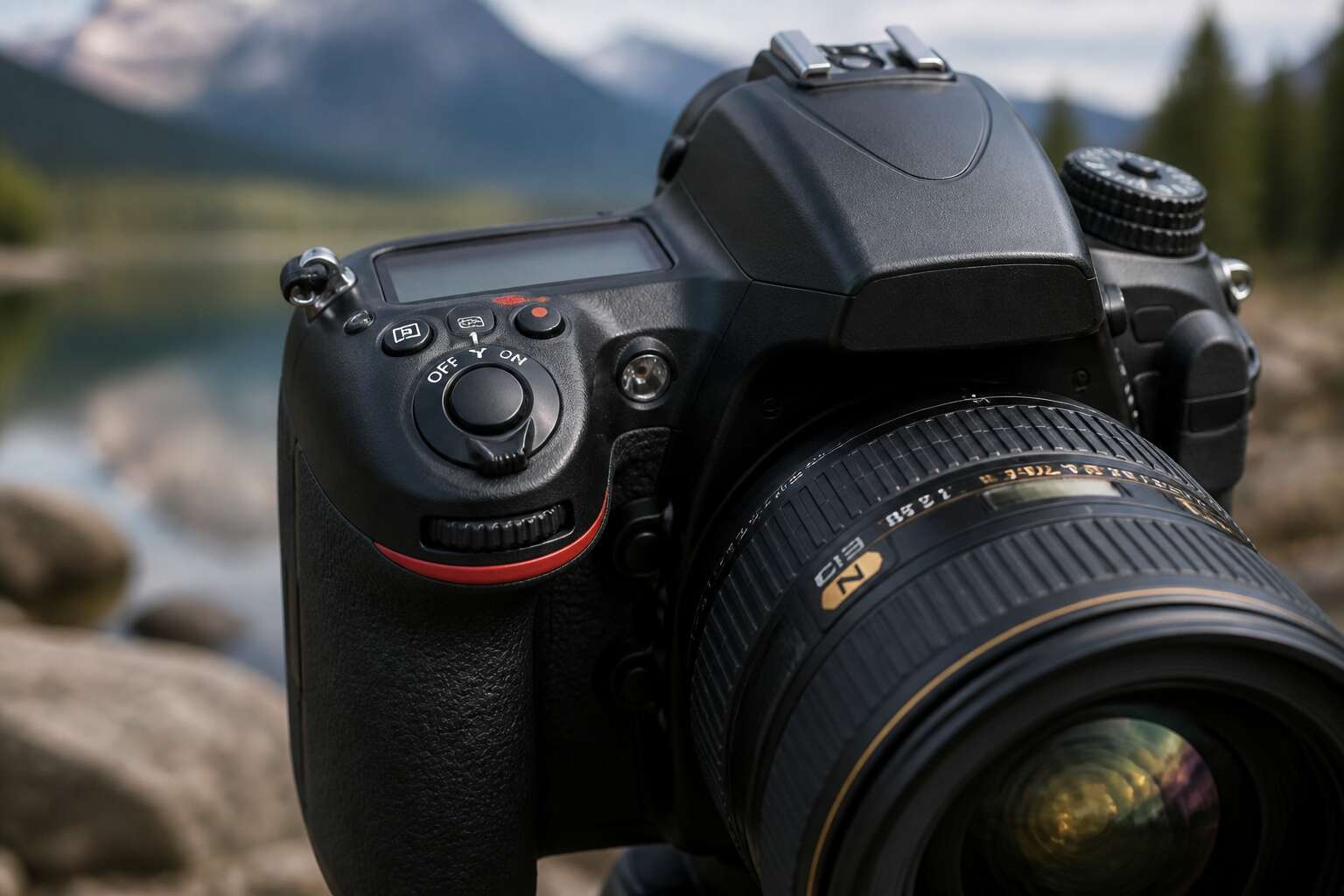
The Basics of DSLR Technology
Understanding the DSLR Acronym
Millions of photos are taken daily, yet the dslr camera meaning stays obscure. The acronym stands for Digital Single Lens Reflex, a system using a mirror to reflect light into an optical viewfinder. Pressing the shutter flips the mirror up, light hits the sensor, and the image is captured. This reflex action happens in milliseconds and gives the camera its name.
Understanding the dslr camera meaning requires appreciating that the viewfinder shows exactly what the lens sees. No digital preview, no processing delay. You see the scene through glass and mirrors, a direct link to the subject. This immediacy matters for photographers who anticipate the moment.
Three core components define the system:
- The reflex mirror that directs light to the viewfinder
- The pentaprism that corrects image orientation
- The sensor that records the image when the mirror lifts
This optical path separates DSLRs from mirrorless cameras, which rely on electronics.
Key Components of a DSLR
Every shutter click triggers a precise sequence inside the camera body, a blend of mechanical movement and electronic processing. Understanding the dslr camera meaning goes beyond the mirror and pentaprism already covered. The basics of DSLR technology depend on how these parts interact under pressure.
Key components include the shutter mechanism, which controls exposure duration, and the autofocus sensor, which reads contrast or phase differences. The image processor then converts raw sensor data into the JPEG or RAW files you review. In South Africa, where harsh midday sun tests dynamic range, these components matter deeply!
- The shutter unit regulates light with precise timing.
- The autofocus module tracks moving subjects like wildlife.
- The image processor handles noise reduction at high ISO.
Each element plays a specific role. The dslr camera meaning becomes clearer when you realize that every component exists to support one goal: capturing light accurately.
The Role of the Mirror Box
The mirror box remains the defining difference between a DSLR and other camera systems. When light enters through the lens, it strikes a mirror angled at 45 degrees, pushing the image upward into the pentaprism. This optical path delivers a viewfinder image that is immediate and unfiltered, with zero electronic delay.
South African photographers shooting in the Highveld’s intense brightness benefit from this direct optical feedback. The mirror also supports phase-detection autofocus sensors, allowing the camera to lock onto subjects with speed. The dslr camera meaning becomes tangible here, in the precise moment when the mirror flips up, the viewfinder blacks out, and the shutter opens to record light.
How Lenses Attach to the Camera Body
The mount itself is a mechanical ballet of tolerances, a bayonet system that demands a satisfying click rather than a hesitant wiggle. This physical bond is the foundation of the entire optical chain, and understanding it is central to grasping the dslr camera meaning.
Most manufacturers employ a specific flange distance, the precise measurement between the lens mount and the sensor plane. This figure dictates the optical formula of every lens you attach. A slight variance here, and sharpness is a fantasy.
In the Johannesburg humidity or the dry Karoo air, this lock is your only constant. When swapping glass, you align a small dot on the lens barrel with the one on the body, then rotate until the mechanism seats. It is a ritual of trust. The camera body offers no compromise; it accepts only the correct companions.
Consider the distinct approaches from prominent brands, each with loyal followings:
– Canon uses the EF and EF-S mounts, with the latter designed for their crop-sensor bodies.
– Nikon employs the F-mount, a legacy system with remarkable continuity across decades.
– Sony and others have shifted to mirrorless designs, but the principle of precise engagement remains.
This interconnection affects communication protocols too. Electronic contacts on the mount transfer data about aperture and focus, allowing the camera to control the lens with silent precision. Without this flawless marriage of metals and circuitry, the dslr camera meaning would be reduced to little more than a light-tight box. The lens becomes an extension of the body, a singular instrument for capturing an image.
How DSLR Cameras Work
The Reflex Mirror and Pentaprism
When you press the shutter, the reflex mirror flips up instantly. But before that moment, this mirror performs another task. It reflects light upward into a pentaprism, a carefully cut glass block. The pentaprism bends the light twice, correcting the inverted image so your eye sees the scene right side up. This entire process happens in milliseconds. Here is a quick sequence:
- Light passes through the lens.
- The mirror reflects it into the pentaprism.
- The pentaprism redirects it to the viewfinder.
That is the dslr camera meaning. Without this mechanism, you would be composing through a separate viewfinder, not through the actual lens. The mirror’s flip also lets light hit the sensor during exposure, but the pentaprism is what makes live viewing accurate.
Image Sensor and Digital Processing
Once the mirror flips, the sensor has a single job: capture light. But the dslr camera meaning extends beyond optics. The sensor converts photons into electrical charges, and the processor reads those charges as pixels. Here is what happens in sequence:
- The sensor’s millions of photodiodes measure light intensity.
- The analog signal moves to the camera’s processor.
- The processor applies color interpolation, noise reduction, and sharpening.
Each step affects your final photograph! The sensor size matters too. A full-frame sensor gives you more light per pixel, which helps in low light. The processor then compresses the data into a JPEG or RAW file. Without this digital backbone, the mirror and lens would only project an empty image.
Autofocus and Metering Mechanisms
In the quest to capture a fleeting moment, the camera must decide where to look and how much light to invite in. Autofocus and metering are the mechanisms that perform these twin duties, often in milliseconds. Phase detection autofocus, a hallmark of the DSLR design, uses dedicated sensors to measure light rays splitting from opposite edges of the lens. The camera’s processor calculates the exact distance the lens elements must travel to achieve sharp focus on the subject. This system is exceptionally swift, which is crucial when tracking a moving car or a player on the rugby field.
While phase detection handles the speed, metering manages the exposure. A separate sensor analyses the light reflecting off the mirror and through the pentaprism. The evaluative metering mode, for example, divides the frame into zones and compares them against a database of millions of images to guess the correct exposure. For more control, a photographer can switch to center-weighted averaging or spot metering.
The process of acquiring focus often follows a logical sequence, which can be broken down as follows:
1. The camera reads the scene and selects a focus point.
2. The autofocus motor drives the lens elements to a preliminary position.
3. The phase detection sensor confirms when the light converges perfectly.
4. The camera locks the focus, and the shutter is ready.
Meanwhile, the light meter continuously communicates with the processor, which then adjusts the shutter speed, aperture, and ISO. This entire conversation happens before the mirror flips. Understanding this interplay is part of the deeper dslr camera meaning, as it reveals why these cameras remain tools of precision for photographers in South Africa and beyond.
DSLR vs. Other Camera Types
DSLR vs. Mirrorless: A Detailed Comparison
In the ongoing debate about dslr camera meaning, the mirrorless camera presents a direct counterpoint. A DSLR shows you the scene through an optical viewfinder, while a mirrorless camera displays a live electronic preview on its screen or viewfinder. This architectural choice changes more than the shape of the camera body. It alters the entire shooting rhythm.
Many photographers prefer the optical viewfinder of a DSLR for its clarity and lack of lag. Others appreciate the electronic preview of mirrorless models, which shows exposure and white balance before pressing the shutter. The practical dslr camera meaning emerges from this difference.
Consider the factors that matter when choosing between them:
- Battery life: DSLRs usually outlast mirrorless because they don’t power a screen constantly.
- Size and weight: Mirrorless systems are lighter and more compact.
- Lens selection: DSLRs have decades of lenses available on the second-hand market.
Benefits of an Optical Viewfinder
Over 1.8 trillion photographs are taken yearly, yet remarkably few happen through an optical viewfinder. The dslr camera meaning rests partly in this deliberate act of looking through glass rather than at a screen. When the Cape Town sun blazes, an optical viewfinder stays legible. A phone screen washes out. A compact camera’s electronic display suffers the same fate.
An optical viewfinder shows reality without digital interpretation or lag. You see precisely what the lens sees. That immediacy matters when photographing the lively streets of Soweto. The scene moves, you press the shutter, the moment is captured. No refresh delay, no pixelation.
I have lost count of candid moments saved by an eye glued to a viewfinder. The optical viewfinder sips no power, produces no glare, and refuses to blackout at the worst possible moment. For anyone who values anticipation over review, this humble window defines the dslr camera meaning.
Battery Life and Longevity
A fully charged DSLR battery outlasts most mirrorless bodies on a single outing. The dslr camera meaning includes this quiet endurance. Because the optical viewfinder uses no power, that charge goes entirely to the shutter and autofocus motor.
I have watched friends drain two mirrorless packs before my DSLR dropped a single bar. Longevity also rests in mechanical simplicity. Fewer chips and screens mean fewer failure points. A robust DSLR shutter commonly exceeds 150,000 actuations, while an electronic unit starts to weaken earlier.
Lens Ecosystem and Versatility
Ask any working photographer in Johannesburg or Cape Town why they still shoot with a DSLR, and the answer often comes down to the lens mount. The dslr camera meaning extends far beyond the body. It represents an entire system built over decades. That mount accepts thousands of lenses, from vintage manual primes to modern autofocus zooms. Mirrorless systems change their mounts frequently, leaving early adopters with adapters and compromises.
Consider the sheer range available for a DSLR:
- Fast prime lenses for low light and portraits
- Macro lenses for extreme close-ups
- Tilt-shift lenses for architectural correction
- Super-telephoto glass for wildlife and sport
No other camera type offers this depth without expensive adapters. Compact cameras are sealed systems. Mirrorless bodies may have newer optics, but their catalogue is still young. I have yet to see a mirrorless mount with this kind of depth. For the working professional, the dslr camera meaning is simple: a tool with a lens catalogue that keeps growing.
Ergonomics and Handling
When you lift a DSLR, the dslr camera meaning shifts from paper to palm. The grip is deep enough for your whole hand to wrap around, and the weight sits low against your body. No more pinching a compact, no more bulk perched on two fingers. Your thumb lands on the rear dial without stretching. Your index finger finds the shutter release every time.
South African photographers often work in bright, dusty conditions. Gloves, wind, and fast movement require controls you can operate by touch. On a DSLR, the right hand manages all essentials:
- ISO button under the thumb
- Main dial for exposure
- Shutter release with a hair trigger
- Autofocus selector near the grip
You build muscle memory within an hour. The ergonomics do not fight you. This is handling that respects a working pace.
The Evolution and Relevance of DSLR Cameras
Historical Milestones in DSLR Development
One 1986 prototype changed photography forever, though few noticed at the time. Nikon’s initial answer to film’s limitations felt like a science experiment. By 1991, Kodak pushed the concept into the hands of working photojournalists with the DCS series. Those first digital bodies were film cameras retrofitted with sensors. They were heavy, slow, and expensive pockets of a borrowed design. The 2003 Canon EOS 300D changed the market for good, lowering the price barrier and introducing the broader public to the digital single lens reflex. Key milestones along the way:
- The 1986 Nikon prototype that proved the concept
- The 1991 Kodak DCS, a modified film body with a sensor
- The 2003 Canon EOS 300D, which made the design practical
Each generation refined the same fundamental architecture. Understanding the dslr camera meaning today requires a look at this trajectory. That meaning is rooted in a simple promise: the optical path you looked through was exactly the path that captured the photograph. That continuity, across decades of digital change, is why the format endures.
The Shift to Mirrorless: What It Means for DSLR
The narrative around the dslr camera meaning has shifted dramatically as mirrorless technology matures. The marketing hype suggests a seismic rupture, yet the reality is a gradual, almost geological change. While mirrorless bodies have captured the headlines, the enduring value of the DSLR lies in its mechanical predictability. The optical viewfinder still presents a direct, unmediated feed from the glass; a real-time reflection of the scene, not a digital composite.
For many working professionals, the shift to mirrorless is a matter of physics versus convenience. The electronic viewfinder offers a preview of exposure, but it consumes battery like a candle in a drafty room. The DSLR, conversely, is a device of longevity. You can leave it on the dashboard for a week, and the battery will still greet you with a full charge. This resilience is a form of silent expertise.
Mirrorless cameras have forced a re-evaluation of what is possible in a smaller package. However, the absence of the mirrorbox changes the ergonomics of balance. Large telephoto lenses feel nose-heavy on compact bodies. The DSLR provides a counterweight, a stabilising heft that steady hands appreciate. The shift is real, but it is not a conquest. It is a bifurcation of the market:
– Commercial photographers need speed and silent shutters for events.
– Studio shooters prefer the optical clarity and tethered reliability of a DSLR.
– Videographers overwhelmingly choose mirrorless for focus assist and 4K crop factors.
These are different tools for different purposes. The dslr camera meaning endures not because it is obsolete, but because it offers a specific, tactile engagement with the craft. The camera industry wants you to upgrade. The images you produce, however, are agnostic to the marketing department. Your eyes, your lens, and your subject matter matter more than the internal mechanisms. The DSLR is a proven instrument with a finesse that still holds its ground against the digital upstarts.


0 Comments